Mythology Meanings That Still Shape Modern Men
A man wearing Medusa, a Spartan helmet, or the hammer of Thor is rarely making a statement about old stories alone. He is reaching for an idea: protection, defiance, endurance, controlled force. That is why mythology meanings have survived long after temples fell silent and empires disappeared. Myths give shape to the forces people still meet in themselves - fear, ambition, grief, loyalty, rage, and the demand to become stronger.
Mythology is not a single codebook in which every symbol has one fixed translation. It is a living record of how different cultures understood the world and the human struggle within it. A symbol can carry its original religious context, centuries of artistic interpretation, and a modern personal meaning all at once. Reading it well requires more than choosing the most dramatic version.
What Mythology Meanings Actually Reveal
At their core, myths are stories built to hold truths that are difficult to state plainly. They do not usually ask, “What happened?” in the historical sense. They ask, “What does it cost to seek power?” “What does courage look like under pressure?” “What follows pride?” “How does a person face death?”
The Greek story of Icarus is not simply a warning against flying too high. It is also about invention, youthful confidence, a father’s fear, and the danger of ignoring limits. The myth of Prometheus is not merely about stealing fire from the gods. Fire represents knowledge, technology, craft, and the burden of bringing a dangerous gift into the world. He becomes a figure of defiance, but his punishment keeps the story from becoming a simple celebration of rebellion.
This complexity matters. The strongest mythology meanings do not reduce life to slogans. They keep opposing truths in tension: discipline and freedom, fate and choice, strength and restraint. That is why these stories remain useful to men trying to build character rather than perform it.
Mythology Meanings in Gods, Heroes, and Monsters
Mythic figures are often treated as personalities, but they work more deeply as archetypes. An archetype is a recognizable pattern of human experience. It does not mean every culture tells the same story or that every symbol means the same thing everywhere. It means certain conflicts recur because human beings repeatedly face them.
The gods: forces that demand respect
Gods frequently represent forces larger than individual will. Zeus governs authority, order, and the instability of power. Athena stands for strategic intelligence, skilled action, and disciplined judgment. Ares embodies the violent rush of battle, while Athena represents the warfare of planning, resolve, and defense.
This distinction is worth holding onto. Strength without judgment is destructive. Judgment without the nerve to act becomes hesitation. Ancient myth often places these qualities in separate figures because human beings rarely possess them in perfect balance.
Norse mythology makes a similar demand through Odin. He is not a polished symbol of easy wisdom. He pursues knowledge at great cost, sacrificing an eye for a drink from Mimir’s well and enduring suffering in pursuit of the runes. His meaning is not that suffering automatically makes someone wise. It is that wisdom has a price, and serious knowledge asks for sacrifice.
The heroes: character under trial
Heroes are not valuable because they are invincible. They matter because their limits are exposed. Achilles has unmatched ability but cannot master his rage or escape mortality. Odysseus survives through patience, intelligence, and adaptability, yet his long return home reveals the cost of cunning and ambition.
Heracles offers another enduring pattern. His labors are not a motivational checklist. They are acts of atonement after catastrophe. He faces monsters, humiliation, exhaustion, and tasks designed to break him. His story gives endurance a harder meaning: not dominance over others, but the willingness to carry responsibility through punishing work.
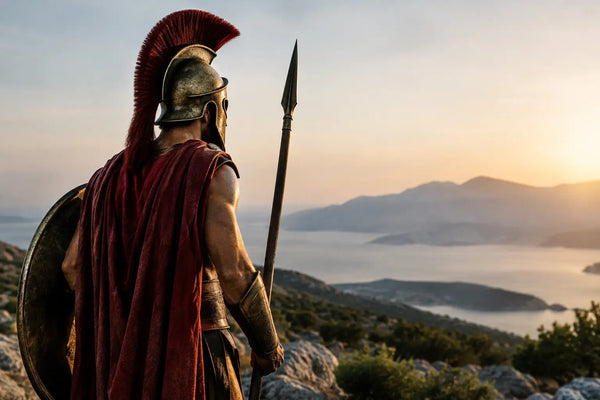
For anyone drawn to warrior-inspired apparel, this is the difference between costume and symbol. A heroic image earns its force when it points beyond aggression toward the virtues that make power worth possessing - courage, restraint, loyalty, and perseverance.
The monsters: what a person must confront
Monsters often externalize threats that human beings recognize but would rather not name. The Minotaur is confinement, appetite, and a violence hidden at the center of a civilization. The Hydra represents problems that multiply when attacked carelessly. Medusa has been understood through several lenses across time: terror, divine punishment, violated innocence, female rage, and a protective image used to repel evil.
That last point is especially revealing. In ancient Greek art, the Gorgoneion - the image of Medusa’s face - was used on shields, buildings, and armor as an apotropaic symbol, meaning it was meant to ward off harm. Her image was not only a monster to defeat. It could also be a defense. Modern designs that use Medusa as a simple emblem of danger miss part of the story. Designs that recognize her as a symbol of fear turned outward carry more weight.
Why Symbols Outlive Their Original World
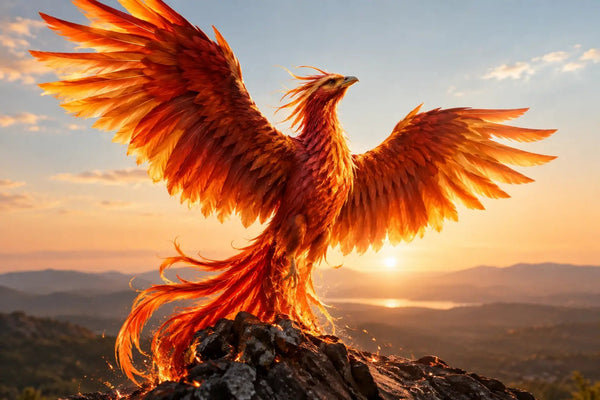
A symbol endures when it can speak across generations without losing all connection to its origin. The phoenix remains meaningful because renewal after destruction is not an ancient problem. The ouroboros, a serpent consuming its own tail, still suggests cycles, recurrence, destruction feeding creation, and the difficult possibility of renewal.
The Spartan lambda is another example. It has become a shorthand for toughness, but its historical setting matters. The lambda appeared on Spartan shields and identified the Lacedaemonians. It was not an all-purpose ancient logo for individual grit. Its modern use can still express discipline and cohesion, but the meaning becomes thinner when the history is ignored.
Runes require similar care. They were writing systems used by Germanic peoples, not a generic category of mystical markings. Some have later associations that vary widely by period and place. Context is the line between meaningful design and borrowed atmosphere.
How to Read Mythology Without Flattening It
The best approach is to hold three questions in mind. First, what did this figure or symbol mean in its original cultural setting? Second, how has its meaning changed through art, literature, religion, and popular culture? Third, what does it honestly mean to you now?
Those questions protect against two weak habits. The first is treating ancient cultures as aesthetic inventory - a supply of helmets, skulls, and cryptic symbols stripped of history. The second is acting as if modern people have no right to find personal meaning in old stories. Both positions fail. Respect for origins and personal connection can exist together.
It also helps to resist the urge to force every myth into a clean lesson. Some myths are contradictory because life is contradictory. Odin is wise and manipulative. Achilles is glorious and catastrophic. Loki is a disruptor, sometimes helper and sometimes threat. Their value lies partly in their refusal to become perfect role models.
Wearing Mythology With Intention
A graphic tee can be more than decoration when its imagery is chosen with care. It becomes a visible reminder of a standard, a struggle, or an idea worth carrying. But the image should suit the meaning. A bold, restrained depiction of the phoenix can communicate recovery without becoming sentimental. A design rooted in Stoic imagery can suggest self-command, provided it does not confuse emotional discipline with emotional denial.
That is the design territory Hilt & Stone treats seriously: meaningful designs that place mythology, philosophy, and ancient history in a modern wardrobe without turning them into novelty graphics. The goal is not to wear an identity you have not earned. It is to wear a symbol that reminds you what you are trying to practice.
Scale and context matter. A small symbol may feel private and meditative. A larger illustration can make a stronger statement and invite conversation. Neither is inherently better. It depends on whether you want the design to function as a personal marker, a piece of visual storytelling, or both.
The Meaning Is Tested in Practice
Mythology does not make a person disciplined. A symbol of Marcus Aurelius cannot do the work of controlling a temper. A wolf, sword, or god does not create courage by itself. Symbols matter because they can recall a principle at the exact moment it is easiest to abandon it.
Choose the myths that ask something of you. Let Prometheus remind you that knowledge carries responsibility. Let Heracles remind you that repair is harder than regret. Let Athena remind you that courage works best when guided by judgment. The old stories remain powerful not because they offer escape from life, but because they make the demands of life easier to see.