Achilles Versus Odysseus and the Cost of Glory
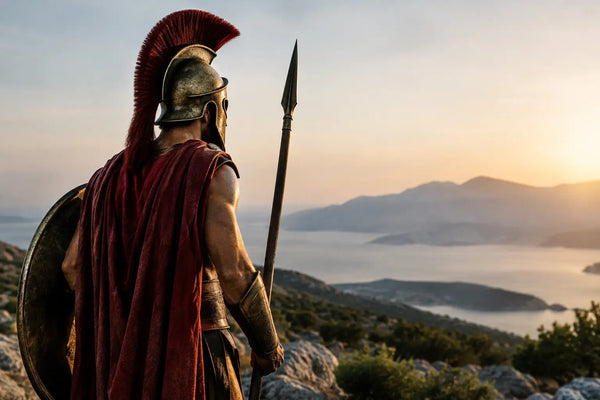
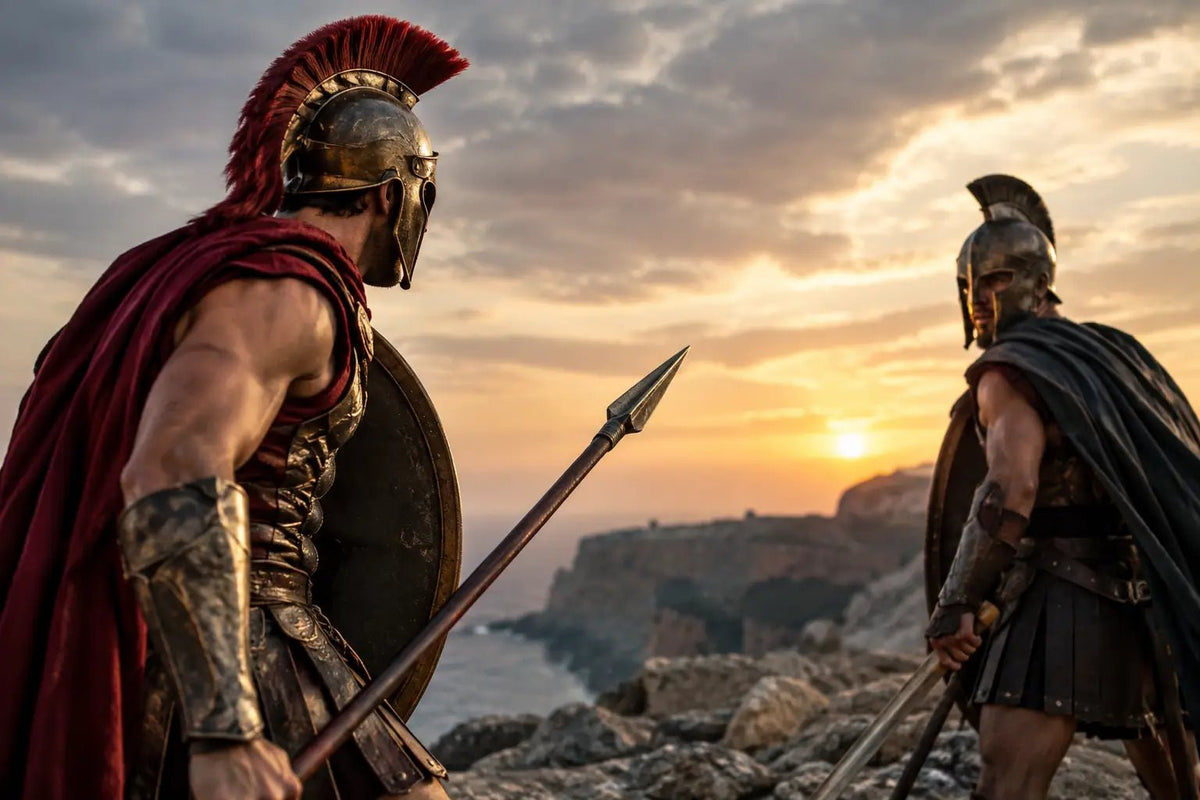
At Troy, no question is merely about who can win a fight. It is about what kind of man deserves to be remembered. Achilles versus Odysseus is therefore not a simple contest between muscle and mind. It is a collision between two enduring ideals: the warrior who stakes everything on honor, and the survivor who bends, endures, and finds the path home.
Homer gives both men exceptional gifts. Achilles is the greatest fighter among the Achaeans, nearly unmatched in speed, strength, and martial terror. Odysseus is polytropos - a man of many turns, many devices, and many ways of meeting the world. One becomes immortal through a glorious death. The other survives through intelligence, restraint, and stubborn devotion to return.
Neither is a complete model on his own. That is precisely why their contrast still carries weight.
Achilles Versus Odysseus: Two Visions of Greatness
Achilles lives by kleos, the fame that outlasts the body. In the Iliad, he is offered a brutal choice: a long, obscure life at home or a short life crowned by undying renown. He knows the cost. He does not stumble into it. When he returns to battle after Patroclus dies, he chooses vengeance and glory with open eyes.
That choice makes Achilles more than a force of nature. He is a tragic figure of terrible clarity. He refuses to pretend that greatness is painless. His excellence is total, but it is inseparable from loss. Every victory brings him closer to the death he already knows awaits him.
Odysseus seeks glory too, but he understands that a dead hero cannot rebuild a household, raise a son, or govern a kingdom. His defining struggle in the Odyssey is not to conquer a city. It is to return to Ithaca after war, shipwreck, temptation, captivity, and divine hostility. His goal is restoration: wife, son, home, order.
This is not lesser ambition. It is a different form of strength. Achilles burns brilliantly at the center of war. Odysseus remains standing after war has scattered every certainty he possessed.
Achilles: Excellence Without Retreat
Achilles represents the uncompromising edge of human potential. He is devastating because he does not hold back. When Agamemnon dishonors him by taking Briseis, Achilles withdraws from the fighting rather than accept humiliation. The decision costs the Achaean army dearly, but it reveals the foundation of his character: honor is not negotiable.
There is a danger in that standard. Achilles can see insult more clearly than consequence. His anger isolates him. It narrows his world until grief turns into merciless violence against Hector and, by extension, against Troy itself.
Yet Homer does not leave Achilles there. When Priam comes to beg for Hector's body, Achilles recognizes his own father in the old king. For a brief and profound moment, rage gives way to shared mortality. The greatest warrior in the Greek tradition becomes human not when he kills, but when he relents.
Odysseus: Intelligence With a Purpose
Odysseus is often reduced to “the clever one,” as if cunning were merely a bag of tricks. Homer presents something deeper. His intelligence is practical, verbal, emotional, and strategic. He knows when to speak, when to conceal himself, when to test another person, and when to wait.
His restraint is as vital as his inventiveness. In the Cyclops episode, his pride nearly destroys him after a brilliant escape. He cannot resist naming himself to Polyphemus, allowing the Cyclops to call upon Poseidon for vengeance. Odysseus pays for that boast through years of suffering.
The lesson is sharp: intelligence without discipline can become self-sabotage. Odysseus is great not because he never errs, but because he continues to adapt after error. He learns that the mind must govern the appetite for recognition.
The Battlefield Is Not Their Only Test
The usual contrast says Achilles wins with the sword while Odysseus wins with the mind. There is truth in it, but it misses the moral pressure of their stories. Both men are tested by power.
Achilles must decide what to do when no one can physically stop him. Once he reenters battle, he becomes nearly unstoppable. The question shifts from whether he can defeat Hector to whether he can master the fury that victory releases. His meeting with Priam answers that question only partially, but powerfully. Compassion becomes an act of strength.
Odysseus faces another kind of power: the power to manipulate, deceive, and control a situation before others understand it. His disguises protect him, but they also create distance. He must return to Ithaca as a beggar, observe the corruption inside his own home, and reveal himself only when the moment is right. Patience is his weapon.
The Trojan Horse, though not told in full in the surviving Iliad, became central to later Greek and Roman tradition because it captures the Odyssean ideal. A fortified city cannot always be broken by force. Sometimes force must be redirected by imagination. But the horse also carries an uncomfortable truth: strategy can be ruthless. Cleverness is not automatically virtue.
For Hilt & Stone's enduring themes of courage and mastery, this distinction matters. A weapon, a symbol, or a hard-won skill has no moral direction by itself. Character determines its use.
Honor, Home, and the Limits of Each Hero
Achilles and Odysseus each possess what the other lacks. Achilles has directness. No one doubts where he stands. His loyalty to Patroclus is absolute, and his courage requires no disguise. But he is poorly suited to a world that demands compromise, delay, and political calculation.
Odysseus can move through that world with remarkable control. He reads a room, survives hostile courts, and makes alliances where Achilles might make enemies. But his habits of concealment carry a cost. The man who can become anyone may struggle to be fully known by others. Even in Ithaca, reunion requires recognition, proof, and time.
This is why choosing a winner in Achilles versus Odysseus misses the deeper point. Achilles is stronger in the moment of irreversible confrontation. Odysseus is stronger across the long campaign of uncertainty. One teaches us how to meet the decisive hour. The other teaches us how to outlast the road that leads there.
A person who only follows Achilles may mistake anger for principle and sacrifice everything for the appearance of honor. A person who only follows Odysseus may become so calculating that conviction disappears. Courage without judgment is destructive. Judgment without courage becomes evasion.
Which Hero Speaks to Modern Life?
Most people will never face a battlefield, a Cyclops, or a king demanding tribute. Yet the ancient conflict remains recognizable. There are moments when a clear line must be held despite the cost. There are also seasons when persistence, discretion, and adaptation are the wiser forms of bravery.
Achilles speaks to the person confronting a necessary trial: the athlete taking the final attempt, the leader accepting responsibility, the individual refusing an easy compromise that would violate a core principle. His example asks a hard question: What do you value enough to risk comfort for it?
Odysseus speaks to the person navigating a long and difficult return: rebuilding after failure, carrying responsibility through unstable conditions, or staying focused when the destination feels distant. His example asks another hard question: Can you preserve your purpose without letting hardship turn you into someone unrecognizable?
The mature answer is not to imitate either hero blindly. It is to know which virtue the moment requires. Sometimes the task is to stand exposed and act. Sometimes the task is to wait, learn, plan, and endure. Discipline is the ability to tell the difference.
Achilles reminds us that a life without conviction can become small. Odysseus reminds us that conviction must survive contact with reality. Hold both lessons close: meet what must be met, but keep enough wisdom to find your way home.