Phoenix Symbolism Meaning and the Discipline of Rebirth
A phoenix is often reduced to a simple message: rise again. But the Phoenix symbolism meaning is harder, sharper, and more useful than a slogan. This is not a bird that avoids ruin. It is a creature that passes through fire, loses its former form, and returns changed. For anyone committed to discipline, resilience, and self-mastery, that distinction matters.
The phoenix does not symbolize easy recovery. It symbolizes the price of renewal. Its enduring power lies in the idea that some versions of a man must end before a stronger one can be built.
Phoenix Symbolism Meaning: More Than Starting Over
At its core, the phoenix represents renewal, resurrection, endurance, and the cyclical nature of life. Yet these broad definitions miss the tension that gives the symbol its force. Rebirth requires an ending. Fire does not preserve what was weak, false, or no longer useful.
That makes the phoenix different from symbols of simple survival. A shield withstands impact. An oak endures the storm. The phoenix goes further. It is destroyed and remade. The old identity, old habits, old illusions, and old comforts are not carried intact into the next chapter.
For this reason, the phoenix speaks to men who understand that progress is rarely clean. Training exposes weakness. Discipline reveals excuses. Failure strips away borrowed confidence. A major loss can erase the life a person thought he was building. None of this is automatically noble. Suffering alone does not create character. What matters is the response: whether the ordeal becomes a forge or merely a wound.
The phoenix is a reminder that renewal is not passive. A man is not reborn because time passes. He is reborn through action repeated after the fire - through work, restraint, honesty, and the refusal to let one bad season define the whole story.
The Ancient Roots of the Phoenix
The familiar phoenix is most closely associated with Greek and Roman writers, who described a magnificent solitary bird connected to the sun. In many accounts, it lived for centuries before building a nest of aromatic branches, dying in flame, and generating new life from its remains. The exact details vary by author, but the central image endures: life renewed from apparent death.
The Greeks did not invent the idea from nothing. Their phoenix was likely influenced by Egyptian religious thought, especially the bennu, a sacred bird linked to the sun, creation, and cyclical renewal. The bennu was associated with Heliopolis, a major center of solar worship. It represented emergence from the primordial waters and the recurring order of the cosmos.
These traditions overlap, but they should not be treated as identical. The Egyptian bennu was not simply the Greek phoenix under another name. Likewise, the Chinese fenghuang is often called a phoenix in modern English, yet it carries a distinct symbolic world shaped by harmony, virtue, imperial association, and the balance of yin and yang. A meaningful symbol becomes weaker when every firebird is flattened into one interchangeable idea.
Still, the shared human attraction is clear. Across cultures, people have looked to birds, flame, and the rising sun to describe renewal. The phoenix became the most enduring expression of that desire because it made rebirth visceral. It gave change wings, ash, heat, and consequence.
Fire as Trial, Not Decoration
In phoenix imagery, fire is not merely visual drama. It is the condition of transformation. That gives the symbol unusual weight in the language of resilience.
Fire can represent grief, hardship, discipline, battle, illness, betrayal, failure, or the private confrontation with a life that has become too small. The symbol does not romanticize any of these experiences. Real hardship can break people, and not every loss arrives with a clear lesson. The phoenix offers something more sober than forced optimism: the possibility that a man can make a new form of himself from what remains.
This is why phoenix symbolism belongs naturally beside Stoic ideas, though it is not itself a Stoic emblem. Stoicism asks us to separate what we can control from what we cannot, then meet adversity with virtue and clear judgment. The phoenix gives that principle mythic form. It cannot prevent the fire. Its greatness is revealed by what follows.
Death of the Old Self
The most mature reading of the phoenix is not "nothing can hurt me." It is "what hurts me does not have the final word."
That is a different kind of strength. It leaves room for scars, grief, and humility. It rejects the shallow performance of invulnerability. A phoenix is powerful precisely because its return follows destruction, not because it was never threatened.
This symbolism applies whenever a former identity has to be relinquished. The athlete who can no longer rely on talent learns discipline. The man who has failed in a relationship develops the courage to become more honest. The worker whose career ends builds a new competence rather than living in resentment. The person who once chased approval chooses standards instead.
There is a trade-off in every transformation. Renewal costs familiarity. It may cost status, old routines, certain relationships, and the false comfort of knowing exactly who you have been. That cost is why rebirth is not always welcome. But when the old structure cannot carry the future, preserving it is not loyalty. It is stagnation.
Why the Phoenix Remains a Symbol of Resilience
Many symbols of strength communicate force: the lion, the wolf, the sword, the hammer. The phoenix communicates something more inward. Its strength is regenerative. It represents the capacity to return with greater wisdom after life has taken its payment.
That is especially relevant in a culture eager for visible victories and fast answers. The phoenix honors the unseen interval between collapse and return. It recognizes the quiet work: waking early when motivation is gone, rebuilding physical health, practicing a craft badly before practicing it well, keeping a promise when nobody is watching.
It also carries a warning. Rebirth should not become an excuse for endless self-destruction. There is no honor in repeatedly burning down a life through avoidable chaos and calling the consequences transformation. The fire of the phoenix is purposeful in myth. In real life, resilience includes protecting what is worth keeping and choosing difficult change before catastrophe forces it.
Wearing the Phoenix With Intention
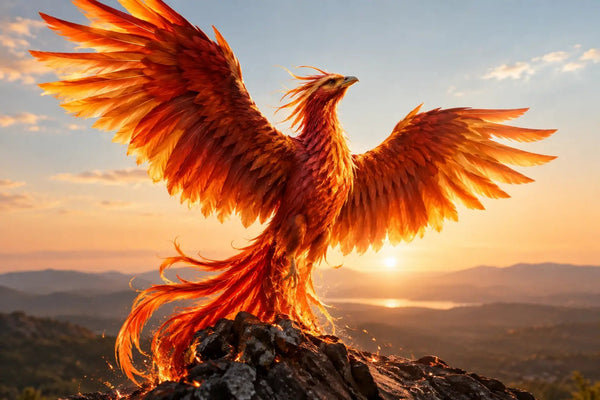
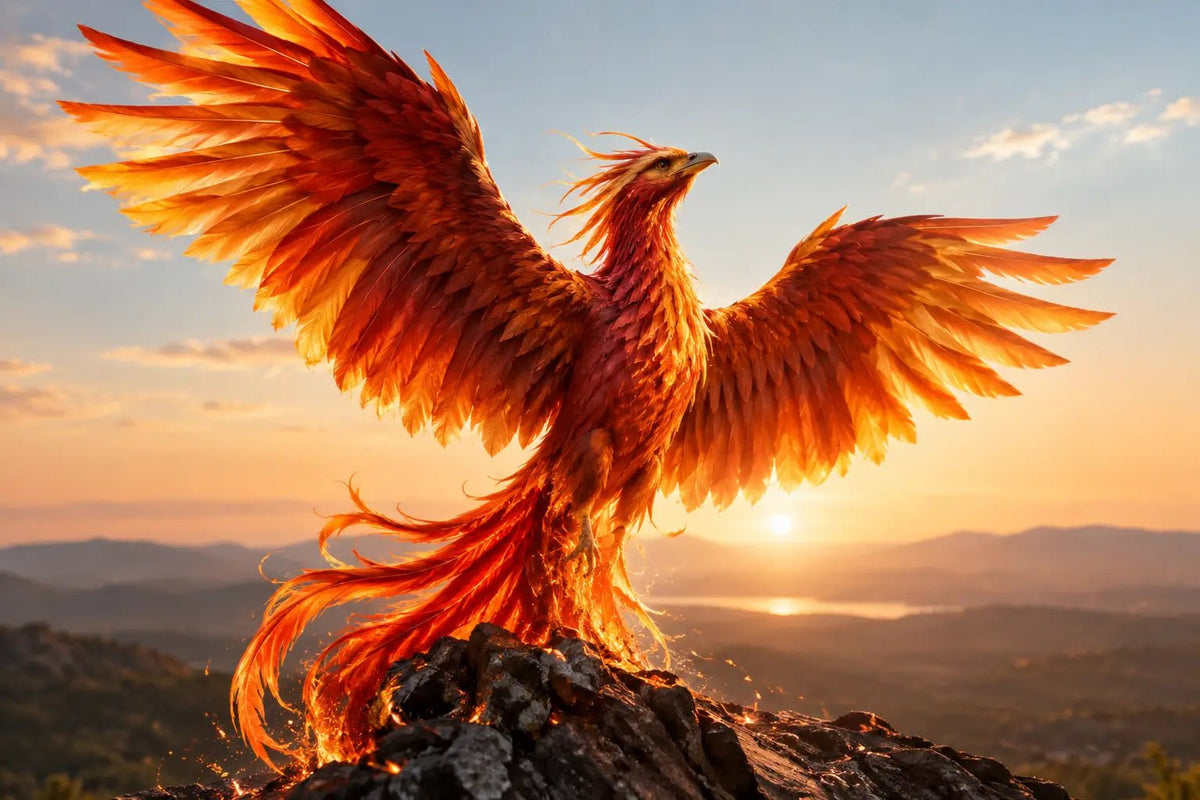
A symbolic graphic tee can function as more than decoration when the image reflects a conviction a person is willing to live by. The phoenix works because its silhouette is immediately powerful - spread wings, rising flame, dark ash, a single bird refusing finality. Yet the strongest design choices preserve restraint.
A meaningful phoenix design does not need cartoon flames or an overloaded motivational phrase. It benefits from bold linework, a disciplined palette, and imagery that gives the symbol room to speak. The goal is not costume-like mythology. It is wearable art with an old idea at its center.
For Hilt & Stone, that standard matters. Mythology-inspired apparel should feel timeless enough to wear beyond a trend and specific enough to start a real conversation. A phoenix shirt can signal resilience, but its deeper meaning is earned by the person wearing it. It should suggest a standard, not advertise a struggle.
The symbol also pairs naturally with other enduring motifs. A phoenix with a sword emphasizes the will to fight forward. A phoenix set against a sun recalls its ancient solar associations. Ash, broken chains, or a weathered laurel can add themes of liberation, earned victory, and return. The right combination depends on the message. More symbols do not always create more meaning.
The Question the Phoenix Asks
The phoenix remains powerful because it refuses to promise a painless life. It offers no shortcut around loss, no guarantee that every ending will make sense, and no fantasy that strength means never falling.
Instead, it asks a harder question: when a former version of you can no longer continue, what will you build from the ash?
That question belongs in the gym, at work, in grief, in recovery, and in the quiet decisions that shape a life. The fire may not be chosen. The next form is.