Why Did Spartans Value Discipline So Deeply?
A Spartan boy did not enter adulthood by declaring his ambitions. He entered it by enduring hunger, cold, exhaustion, instruction, and public judgment. That severity answers much of the question, why did Spartans value discipline? To Sparta, discipline was not a private virtue or a productivity tactic. It was the force that held a small ruling population together in a hostile and unequal society.
Their example still carries weight because it strips discipline of comfort. The Spartan ideal was not about feeling motivated. It was about doing what duty required when comfort, appetite, fear, and individual preference argued otherwise.
Why Did Spartans Value Discipline Above Comfort?
Sparta sat in the fertile Eurotas Valley of Laconia, but its prosperity came with a permanent threat. The Spartan state had conquered neighboring Messenia and reduced much of its population to helot status. These enslaved agricultural laborers outnumbered Spartan citizens by a wide margin. Spartan citizens could devote themselves to military and civic life precisely because helots worked the land.
This arrangement made internal security a central obsession. Sparta could not afford citizens who were soft, divided, or consumed by private luxury. Its ruling class needed men prepared to act as one body, enforce authority, and meet revolt or invasion without hesitation. Discipline became political survival.
That context matters. The Spartan system is often admired as a clean story of toughness, but it was built on coercion and profound inequality. Its famous order came at a human cost, especially to the helots who bore its economic burden. To understand Sparta honestly is to see both the formidable discipline and the system of domination it served.
For the Spartans themselves, however, self-command was inseparable from freedom. A citizen who could not master hunger, fear, anger, or vanity was vulnerable to manipulation. A city full of such men was vulnerable too.
The Agoge Turned Discipline Into Identity
Spartan discipline was not left to family preference. It was cultivated through the agoge, the state-directed education and training system that began for boys around the age of seven. Boys lived in communal groups, trained physically, learned music and civic ideals, and were subjected to constant evaluation.
The point was not simply to produce stronger fighters. It was to form citizens whose instincts aligned with the demands of the state. They were taught to bear discomfort without complaint, speak concisely, obey legitimate authority, and compete without losing control. The famous Spartan brevity, often called laconic speech, reflected this larger ideal: say what matters, waste nothing, and do not perform for applause.
The agoge also used deprivation deliberately. Boys received limited food and clothing, encouraging toughness and resourcefulness. Stories of young Spartans stealing food are sometimes repeated as proof that theft was praised. The more precise lesson is harsher: resourcefulness might be tolerated, but getting caught brought punishment. The standard was competence under pressure, not moral permission to take what one wanted.
This reveals a key Spartan principle. Discipline was not passive obedience. It was disciplined capability - the ability to act effectively within strict boundaries.
A Phalanx Made Individual Weakness Everyone's Problem
The Spartan reputation rests largely on battlefield courage, but their military strength was rooted in formation rather than individual heroics. Greek hoplite warfare depended on the phalanx: heavily armed infantrymen standing shoulder to shoulder, shields overlapping, advancing as a unit.
In that formation, one man's panic could expose another man's body. A soldier who broke rank did not merely save himself. He weakened the line, endangered his companions, and could turn a hard contest into a rout. Discipline therefore had immediate physical meaning. Hold your place. Keep your shield up. Move with the formation. Do not let fear decide for you.
This is why the Spartan ideal was so communal. Modern ideas of toughness often center on personal achievement: lifting more, earning more, proving more. Sparta valued the man who could subordinate ego to the task shared by the group. Courage was not theatrical aggression. It was reliability when others depended on you.
The legend of Thermopylae endures for this reason. The story is not merely that Spartans fought bravely against impossible odds. It is that they remained at their post after the outcome had become clear. History has polished the event into myth, and the wider Greek force is too often forgotten, but the symbolic power remains: discipline means standing firm when escape is easier.
Shared Hardship Kept Status From Becoming Luxury
Spartan citizens also gathered in common messes, known as syssitia. Adult men ate with their assigned groups rather than retreating entirely into private domestic life. These meals reinforced fellowship, mutual scrutiny, and the idea that citizenship carried ongoing obligations.
Sparta did not eliminate hierarchy, nor did it make every person equal. Its equality was narrow, reserved for male Spartan citizens who met the demands of the system. Yet within that class, public culture discouraged excess display. The citizen was expected to look and live like a man devoted to the city, not a man captured by indulgence.
This did not mean Spartans rejected every pleasure or possessed no wealth. Real Sparta was more complicated than its austere legend. Over time, wealth concentration and declining citizen numbers damaged the social order Sparta had tried to preserve. The lesson is not that severity permanently solves corruption. It is that a culture without shared standards eventually struggles to ask sacrifice from its members.
Discipline Was Also a Form of Reputation
Sparta's power was partly material, but its reputation did immense work. Other Greek cities knew the Spartans as formidable, orderly, and difficult to intimidate. That reputation could discourage enemies before battle began and strengthen alliances when uncertainty rose.
A disciplined people project predictability. Allies know where they stand. Rivals know that threats will meet resistance. Within Sparta, public shame reinforced these expectations. Reputation was not a polished personal brand. It was a record of whether a person could be counted on.
There is a darker side to this. A society organized around honor and shame can become rigid, cruel, and unforgiving of weakness. Spartan discipline produced cohesion, but it left little room for individuality, dissent, or a life chosen outside the demands of the state. It is worth admiring the resolve without romanticizing the cage.
What the Spartan Ideal Still Gets Right
No modern person should try to recreate ancient Sparta. Its institutions belonged to a violent world and depended on conditions that deserve no imitation. But the central insight survives: freedom without self-command is fragile.
Discipline is not punishment for being human. At its best, it is a decision about what deserves authority over your actions. It may mean training when the excitement has passed, keeping a promise when nobody is watching, speaking with restraint, or placing a long-term purpose above a short-term appetite.
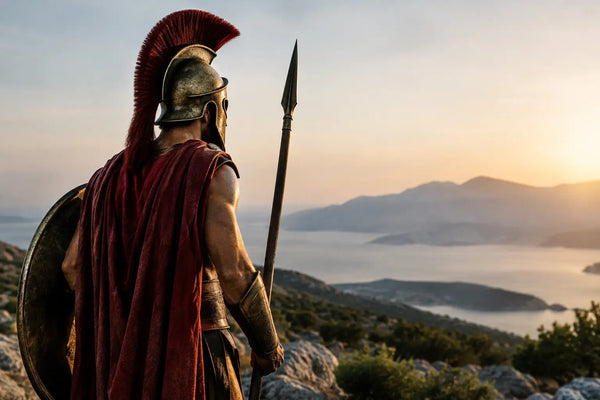
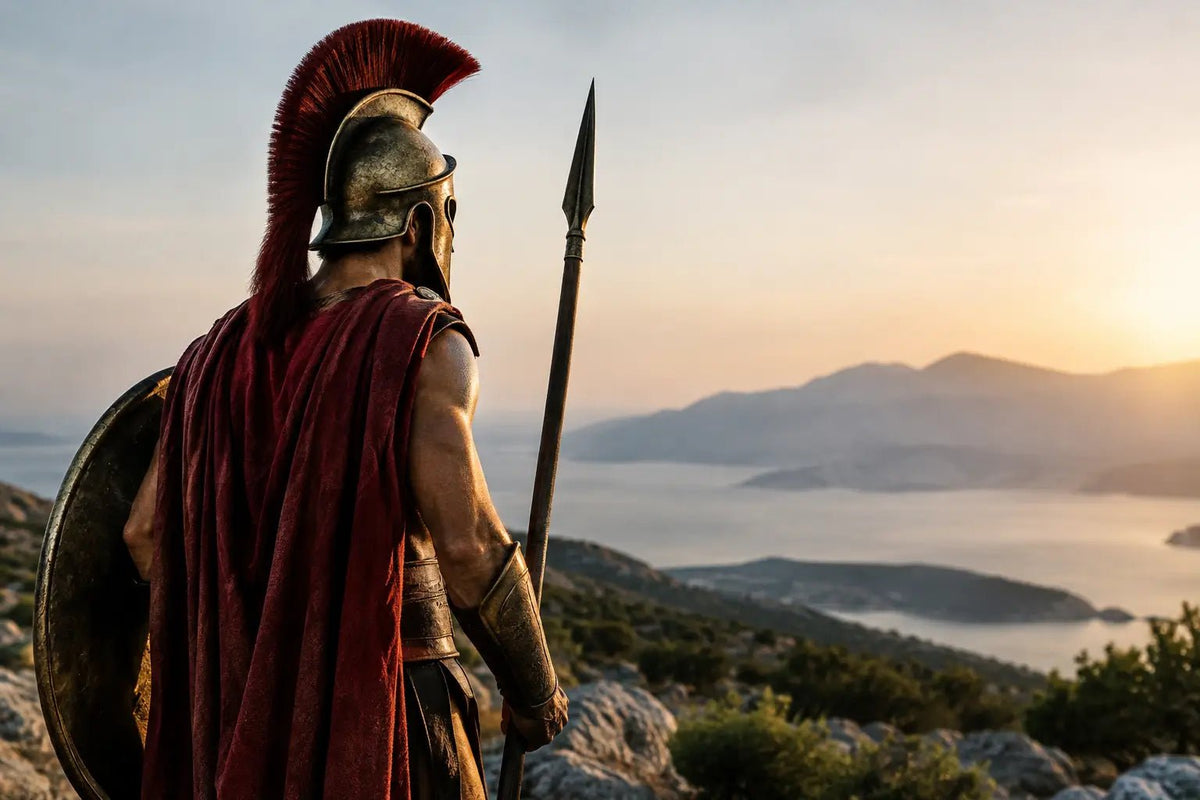
That is why Spartan symbols still resonate in meaningful designs, ancient history shirts, and warrior-inspired apparel. They are not compelling because a bronze helmet looks fierce. They endure because they point toward a demanding question: what do you stand for when the conditions are not ideal?
At Hilt & Stone, that question sits behind apparel built to feel timeless. A symbol earns its place when it carries more than surface-level aggression. The Spartan legacy, understood clearly, represents trained resolve, shared responsibility, and the refusal to let comfort govern character.
The useful Spartan lesson is not to become harder for the sake of hardness. It is to choose a code worthy of your effort, then practice it until pressure reveals something steadier than impulse.