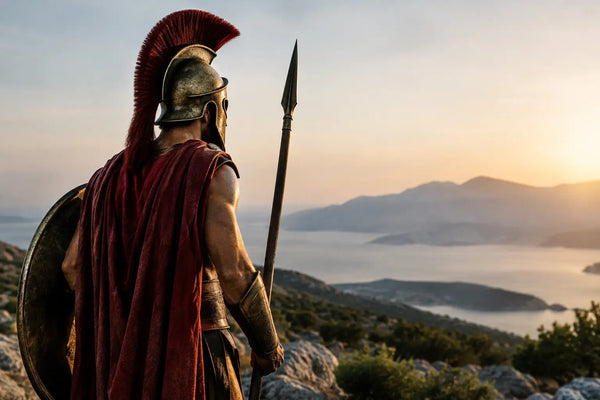
How to Use Archetypes Daily Without Losing Yourself
The soldier who never rests becomes brittle. The sage who only reflects never acts. The rebel who fights every rule eventually becomes ruled by his own anger. That is the real value of learning how to use archetypes daily: not to pick a personality and perform it, but to call on the right inner posture when a situation demands it.
Archetypes are recurring human patterns. They appear in myth, history, religion, literature, and the stories men tell about courage, ambition, betrayal, sacrifice, and survival. They endure because they give shape to forces most people recognize in themselves. The warrior faces danger. The king creates order. The sage seeks truth. The explorer leaves familiar ground.
Used well, archetypes are not costumes. They are tools for self-command.
Start With the Situation, Not the Identity
The mistake is saying, “I am the warrior,” as if one role can explain an entire life. A man may need the warrior’s decisiveness during a difficult conversation, the sage’s restraint when facts are unclear, and the caretaker’s patience with his family before the day is over.
Ask a more useful question: What does this moment require of me?
If the moment requires a hard boundary, the warrior may be useful. If it requires long-term judgment, look to the king. If it requires learning from failure, call on the student or sage. Archetypes become practical when they help you move beyond your default reactions.
This matters most under pressure. Stress narrows behavior. You may avoid conflict, rush into it, overexplain, shut down, or seek approval. A chosen archetype gives you a deliberate alternative. It creates a small distance between impulse and action.
Choose Three Archetypes for Daily Life
You do not need a pantheon of identities. Start with three archetypes that cover the main demands of your life: one for action, one for judgment, and one for renewal.
For many men, the warrior, the king, and the sage form a useful foundation. The warrior represents courage, disciplined effort, and the willingness to endure discomfort. The king represents responsibility, order, standards, and stewardship. The sage represents reflection, discernment, and respect for truth.
Your version may differ. An artist may rely on the creator, the explorer, and the sage. A father rebuilding his life may need the protector, the craftsman, and the king. The point is not to choose the most impressive figures. Choose the patterns that correct your weak spots while strengthening what is already sound.
A man who is naturally aggressive may not need more warrior energy. He may need the sage to slow him down and the king to consider consequences. A man who is thoughtful but hesitant may need the warrior to turn insight into action.
How to Use Archetypes Daily in Real Situations
The strongest practice is simple: name the challenge, select the archetype, then choose one visible behavior.
Before a meeting, a difficult call, a workout, or a decision, take ten seconds to identify what is required. Then translate the archetype into conduct. The warrior does not merely “feel strong.” He speaks plainly, starts the hard task, and keeps his word. The sage does not merely “think deeply.” He asks a better question, checks his assumptions, and waits for evidence. The king does not merely “lead.” He sets priorities, protects the standard, and accepts responsibility for the atmosphere he creates.
Consider a few ordinary examples. If you are avoiding an email that could resolve a problem, use the warrior: write the first honest sentence and send it. If a colleague challenges your idea, use the sage: ask what you may be missing before defending your position. If your house, calendar, or finances have fallen into disorder, use the king: make a plan, remove one source of chaos, and follow through.
The archetype should change your behavior, not just your mood. If nothing becomes more honest, disciplined, calm, or useful, then it is probably only fantasy.
Use a Morning Prompt
A brief morning prompt can keep the practice grounded. Write one sentence: “Today I will lead with the ___ when ___.”
For example: “Today I will lead with the sage when I receive criticism.” Or: “Today I will lead with the warrior when I want to postpone training.” This is not empty affirmation. It is pre-commitment. You are deciding who you intend to be before the day tests you.
At night, review the result without self-punishment. Where did the archetype help? Where did you overdo it? The warrior can become combative. The king can become controlling. The sage can become detached. Every archetype has a shadow, which is simply a strength pushed beyond wisdom.
Learn the Shadow Side Before It Leads You
Archetypes are powerful because they simplify a complicated moment. Their danger is that they can simplify you.
The warrior’s shadow is needless conflict, emotional numbness, and treating every disagreement like a battle. The king’s shadow is arrogance or the belief that authority excuses poor conduct. The sage’s shadow is analysis without commitment. The rebel can resist injustice, but he can also become addicted to opposition. The lover can create loyalty and connection, but can lose himself in approval or pleasure.
This is why archetypal practice requires honesty. Do not use “warrior” as a flattering name for impatience. Do not call avoidance “wisdom.” Do not call domination “leadership.” The standard is not whether an archetype makes you feel powerful. The standard is whether it makes you more capable of serving the responsibilities in front of you.
A useful test is to ask: Does this role make me more disciplined, more truthful, and more accountable? If the answer is no, step back.
Build Symbols Into Your Environment
Human beings remember through symbols. A symbol can bring a principle to mind faster than a paragraph of advice. Ancient cultures understood this well. Standards, shields, animals, weapons, gods, and emblems gave visible form to invisible values.
Your symbols do not need to be theatrical. They can be a journal marked with an image of Athena, a clean workspace that reflects the king’s order, or a training ritual that calls up the warrior’s discipline. Meaning grows through repetition.
Clothing can serve the same purpose when the design carries real weight. A well-made mythology shirt or symbolic graphic tee is not a substitute for character. It can be a private reminder of the standard you have chosen to carry. Hilt & Stone builds meaningful designs around that idea: apparel that gives myth, philosophy, and enduring symbols a place in modern life without turning them into costume.
Wear the symbol because it means something to you, not because you need strangers to believe something about you.
Keep the Practice Flexible
Archetypes are maps, not diagnoses. They can help you notice patterns, but they cannot explain every motive, relationship, or struggle. Psychological archetypes are useful frameworks, not scientific proof that every person fits a fixed set of roles.
Your responsibilities will also change with time. The archetype that carried you through a hard season may not be the one you need now. A man building a career may need the explorer’s appetite for risk. A man raising children may need the protector’s steadiness. A man recovering from loss may need the healer’s patience before he is ready to return to the warrior’s demands.
Do not confuse growth with becoming harder. Sometimes the strongest act is restraint. Sometimes courage is an apology. Sometimes leadership is making room for someone else to speak.
The goal is not to become a character from a myth. It is to become more present when life asks something difficult of you. Choose the posture the moment requires, embody it through one concrete action, and let your conduct carry the symbol.