How to Use Memento Mori Without Living in Fear
A calendar packed with obligations can create a strange illusion: that there will always be a later. Later to make the call, begin the work, repair the friendship, train the body, or become the man you keep promising yourself you will be. Learning how to use memento mori cuts through that illusion. It is not an exercise in gloom. It is a clear-eyed reminder that life is finite, and that finitude gives every serious choice its weight.
The Latin phrase translates simply: remember that you must die. For the Stoics, this was not a threat hanging over life. It was a way to return to life with greater attention, discipline, and gratitude. Death is certain. The question is whether that fact makes you retreat from living or finally begin doing it deliberately.
What Memento Mori Actually Means
Memento mori has roots in the ancient world, though its meaning has traveled far beyond Rome. It appeared in art, philosophy, religious practice, and military culture as a reminder that status, wealth, victory, and physical strength are temporary. A skull on a ring, a grave inscription, a weathered statue, or a philosopher's reflection could all carry the same message: do not confuse what is fleeting with what is lasting.
The Stoic version is especially useful because it is practical. Marcus Aurelius repeatedly returned to the shortness of life, not because he despised the world, but because he wanted to meet his obligations without vanity or delay. If praise fades, if possessions pass on, and if tomorrow is not guaranteed, then character becomes the work worth doing now.
That is the central distinction. Memento mori is not nihilism. Nihilism says nothing matters. Memento mori says time matters because it is limited. Your conduct matters because it is the part of life most fully under your command.
How to Use Memento Mori in Daily Life
A useful memento mori practice should make your life more grounded, not more theatrical. You do not need to turn every morning into a meditation on catastrophe. The point is to interrupt mindless postponement and place your energy where it can still make a difference.
Start the day with one honest question
Before reaching for messages, headlines, or noise, ask: If this were one of my remaining days, what would deserve my best attention? The answer will rarely be dramatic. It may be finishing the difficult assignment, showing patience with your children, making time to train, or having the conversation you have avoided.
This question does not demand that you abandon ordinary responsibilities. It helps you see them correctly. The work, the promise, the physical practice, and the people in front of you are often the very substance of a meaningful life.
Use death as a filter for decisions
When you are caught between two choices, memento mori offers a demanding filter: which choice would look more honorable from the far end of your life? Not easier. Not more impressive to strangers. More honorable.
That filter can clarify career decisions, spending habits, and relationships. It can also expose false urgency. Many things that consume attention will be forgotten within a week. A neglected friendship, a compromised principle, or years spent avoiding meaningful work carry a heavier cost.
This is not a call to reckless spontaneity. Quitting your job, draining your savings, or burning down commitments because life is short is not wisdom. Mortality is a reason to choose carefully, not impulsively. Sometimes the honorable path is risk. Sometimes it is patience, preparation, and showing up again tomorrow.
Build a ritual that returns you to perspective
A ritual works because memory is unreliable. We know life is finite, then proceed through the day as if the knowledge has no claim on our behavior. Give the idea a physical place: a line written in a journal, a small symbol on your desk, a passage read before training, or a moment of silence at night.
Symbols matter because they compress a large idea into something immediate. The skull, the hourglass, the extinguished candle, and the laurel all appear in memento mori imagery for a reason. They are not decorations when used with intention. They are visual reminders of transience, effort, mortality, and the limits of worldly victory.
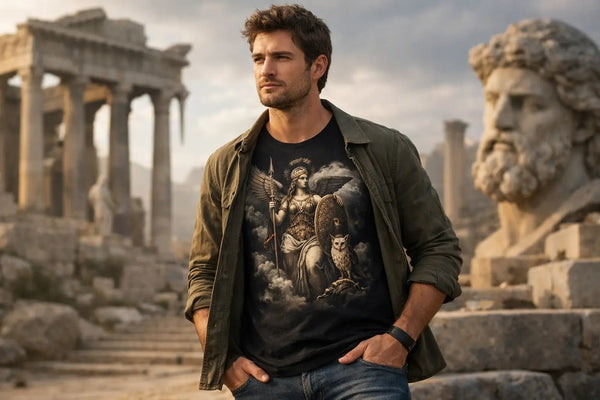
For some men, a symbolic graphic tee or a piece of apparel with Stoic imagery can serve the same purpose. The best designs do not announce a borrowed identity. They act as a private standard worn in public. Hilt & Stone builds meaningful designs around that principle: ancient symbols and enduring ideas made wearable without turning philosophy into costume.
Let it sharpen gratitude, not anxiety
Memento mori can become unhealthy if it feeds obsessive fear, panic, or a constant fixation on loss. If thoughts of death are intrusive or distressing, this practice is not a substitute for speaking with a qualified mental health professional. A philosophical tool should support a life well lived, not intensify suffering.
Used well, mortality makes ordinary things more vivid. A meal with family becomes less routine. A strong body becomes less a source of vanity and more a gift to steward. A quiet walk, a hard-earned skill, and the chance to serve someone else gain depth when you stop treating them as permanent fixtures.
Gratitude here is not soft sentiment. It is accurate perception. Nothing is owed to you. Much has been given. Meet it with attention.
Put Memento Mori Beside Discipline
The phrase is often used as a prompt to chase experience. That can be part of it, but the deeper lesson is discipline. Since time is limited, scattered effort is expensive. Since the body is mortal, care for it. Since opportunities close, prepare before the moment arrives. Since your name will not outlast every generation, make sure your actions hold up without an audience.
This is where memento mori belongs beside Stoic practice. You cannot control how long you live, how others judge you, or whether fortune turns against you. You can control whether you train your mind, keep your word, do difficult work, and meet adversity without surrendering your standards.
Try attaching the reminder to a repeated act. Before a workout, remember that strength is temporary and therefore worth developing. Before opening your laptop, remember that your hours are not disposable. Before speaking in anger, remember that neither you nor the person before you has unlimited time. The practice becomes real when it changes behavior at the point of choice.
What Memento Mori Is Not
It is not a license for performative seriousness. Quoting Marcus Aurelius while treating people poorly is not Stoicism. Wearing a skull without examining your habits is not reflection. Symbols can point the way, but they cannot do the work.
It is also not an argument against ambition. The ancient reminder does not ask you to abandon excellence because all achievements fade. It asks you to pursue excellence without becoming enslaved to recognition. Build, compete, create, lead, and strive. Just do not mistake the prize for the person you are becoming while pursuing it.
Nor does it require emotional detachment. Death makes love more precious, not less. Knowing that people are temporary should make you more present with them. Courage is not numbness in the face of loss. It is choosing loyalty, effort, and affection despite the certainty that nothing can be held forever.
A Simple Evening Practice
At the end of the day, take two minutes to review it without excuses. Ask yourself three things: Where did I spend time on what mattered? Where did I delay through comfort or distraction? What is one action I will not postpone tomorrow?
Write a sentence if that helps. Keep it plain. The purpose is not self-punishment or elaborate journaling. It is to close the gap between what you claim to value and how you actually spend your days.
Over time, this practice changes the texture of decision-making. You become less impressed by noise, less willing to waste your attention, and more capable of gratitude without passivity. You stop waiting for a dramatic sign to live with purpose.
Remembering death is not about standing in the shadow of the end. It is about standing fully inside the day you have been given, with your eyes open and your standards intact.