The Greatest Women in Mythology Remembered
Power in myth is rarely gentle, and it is never simple. The greatest women in mythology are not remembered because they made life easy for those around them. They endure because they ruled, protected, created, mourned, fought, deceived, healed, and refused to be reduced to a single virtue.
Their stories were carried across temples, battlefields, hearths, and royal courts. Some were worshiped as divine forces. Others were mortal women whose choices became larger than history. Read closely, these figures offer more than inspiration. They reveal ancient arguments about authority, sacrifice, courage, desire, and the price of independence.
What Makes the Greatest Women in Mythology?
There can be no final ranking. Mythology is not a contest with neutral rules, and the surviving stories often passed through the hands of priests, poets, kings, and later translators. A figure celebrated as wise in one tradition may be feared as dangerous in another. That tension is part of her meaning.
The women who matter most in myth tend to possess agency. They do not simply endure events. They alter them. Their strength may appear as martial skill, political intelligence, maternal ferocity, sacred knowledge, or the ability to cross boundaries between life and death. The point is not that every figure is admirable. Some are terrifying. But all command attention.
Athena: Discipline Turned Into Power
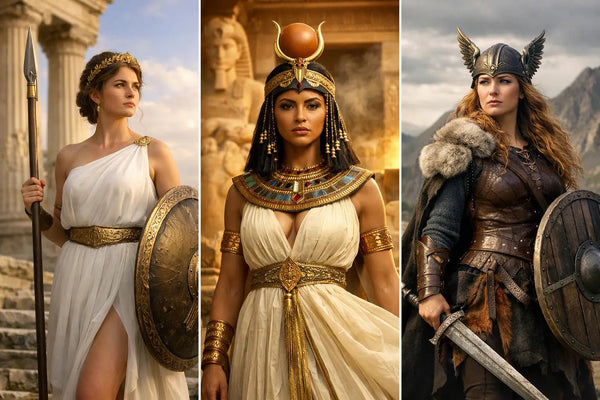
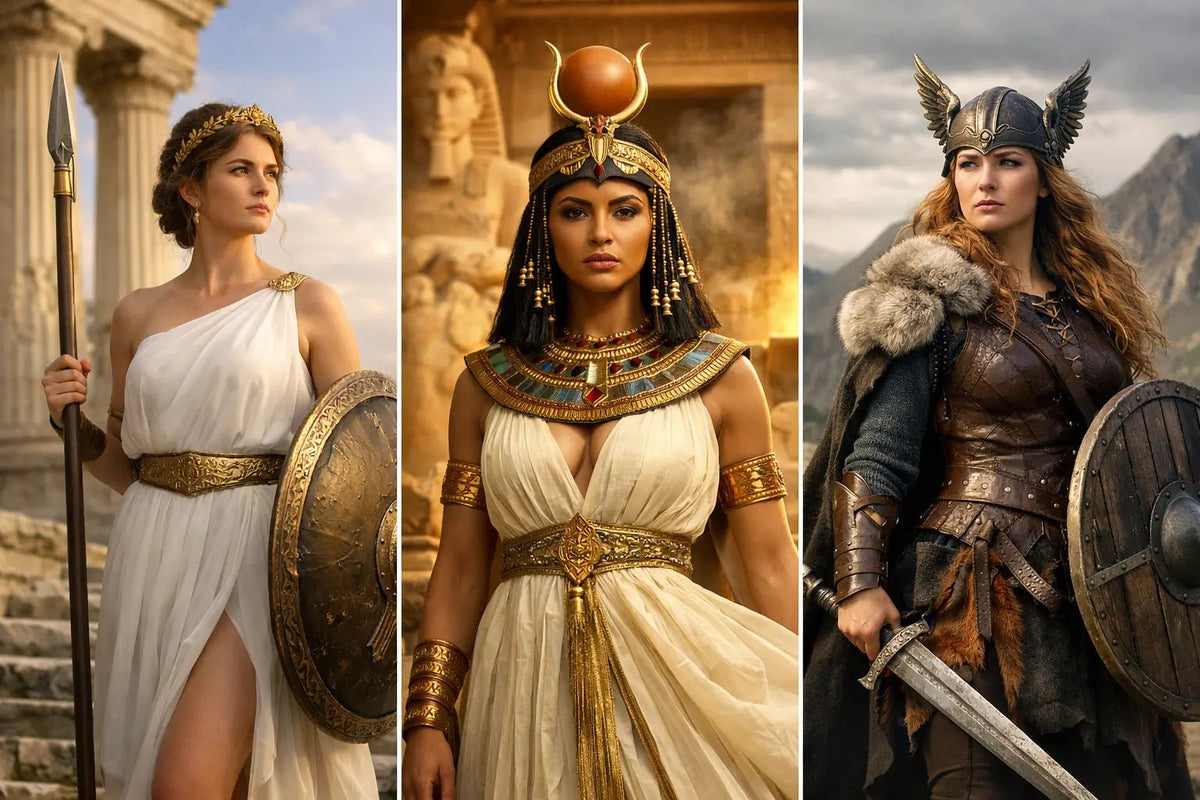
Athena, the Greek goddess of wisdom and strategic warfare, represents a form of strength that refuses spectacle for its own sake. She is not the frenzy of battle. She is the clear mind before the shield wall closes: planning, restraint, craftsmanship, law, and the discipline to act at the right moment.
Her birth from the head of Zeus made her an unusual figure even among the Olympians. Ancient myth places her outside ordinary family roles, a detail that helped establish her as independent and politically potent. Yet that independence comes with complexity. Athena often supports heroes, cities, and patriarchal order, while still standing as one of antiquity's most formidable female powers.
Her lesson is not aggression. It is preparation. Courage without judgment can become waste. Athena reminds us that mastery is built through thought, training, and a steady hand under pressure.
Her symbol: the owl
The owl sees in darkness. It is a fitting emblem for a goddess whose power lies in perception. Wisdom is not passivity. It is the ability to recognize what others miss before the moment for action arrives.
Isis: The Power That Rebuilds What Was Broken
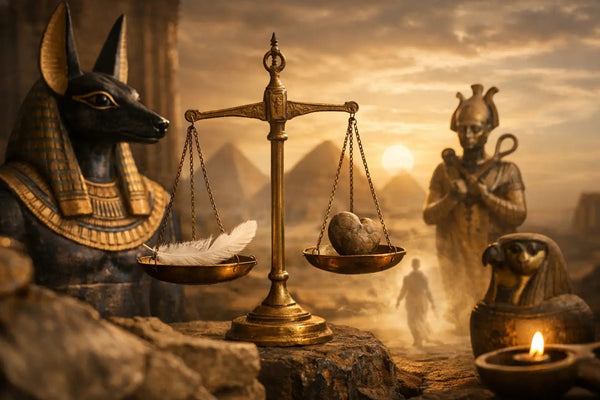
No figure better expresses sacred resilience than Isis of ancient Egypt. Wife of Osiris, mother of Horus, healer, mourner, and protector, she becomes central to one of mythology's great stories of loss and restoration. After Osiris is murdered and dismembered by his brother Set, Isis searches for his scattered body, restores him through ritual knowledge, and protects their son from danger.
This is not a quiet domestic tale. Isis confronts death, disorder, exile, and political violence. Her persistence restores the possibility of legitimate rule through Horus. In a world where cosmic order depended on balance, her work was nothing less than civilization-preserving.
Isis was also revered far beyond Egypt. As her worship spread through the Mediterranean, she came to embody protection, healing, and devotion with unusual reach. But reducing her to a nurturing mother misses the force of her character. Isis succeeds because she knows sacred words, understands consequences, and will not abandon the work when grief demands endurance.
Inanna: Desire, Ambition, and the Descent Below
Inanna, known later in related traditions as Ishtar, is among the oldest and most arresting divine figures in recorded mythology. The Mesopotamian goddess of love, war, fertility, and kingship contains forces modern audiences often prefer to separate. She is sensual and violent, generous and demanding, life-giving and ruinous.
Her descent into the underworld is especially revealing. In the story, Inanna passes through seven gates, surrendering an item of regalia at each one until she stands stripped of rank before her sister Ereshkigal, queen of the dead. She is judged, killed, and only later restored to life.
The tale is not a clean story of empowerment. Inanna does not conquer death without cost. Her return requires substitution and leaves damage behind. That is precisely why the myth endures. It understands that ambition, transformation, and power can demand a descent through the parts of life no title or armor can prevent.
Freyja: A Goddess No One Could Possess
In Norse mythology, Freyja is associated with love, beauty, fertility, gold, battle, and seidr, a form of magic connected to prophecy and altered consciousness. She receives half of the slain warriors in her field, Folkvangr, while Odin receives the other half in Valhalla. This alone disrupts the common idea that Norse valor belonged only to men.
Freyja is desired by giants, admired by gods, and frequently treated as a prize by those who misunderstand her. Yet the myths repeatedly show that she cannot be handed over as payment. When the gods consider giving her to a giant in exchange for protection, the arrangement is treated as an intolerable insult.
She is not a symbol of softness. She is sovereignty over one's own worth. Freyja's tears may be gold, but grief does not diminish her authority. She holds beauty and battle in the same hand, refusing the false choice between tenderness and strength.
Mulan: Honor Beyond the Limits of Custom
Mulan occupies a different category from the goddesses above. Her story emerged from Chinese ballad tradition, and the earliest surviving version, The Ballad of Mulan, does not present her as a goddess or a purely supernatural hero. Still, her cultural force belongs beside mythology because her name became an enduring vessel for courage, duty, and identity.
In the ballad, Mulan takes her aging father's place in military service. She serves for years, earns distinction, and refuses official rewards when she returns home. Only then do her former comrades discover that the warrior beside them was a woman.
Later retellings differ sharply. Some make her a model of filial duty; others emphasize individual defiance or romantic struggle. The earliest ballad is more restrained, which gives it force. Mulan does not demand recognition. She proves capability through action. Her story asks a severe question: if courage, discipline, and loyalty are visible on the field, why should gender decide who is permitted to serve?
Medea: The Warning Against Simplified Heroes
Not every great mythic woman is a model to imitate. Medea, the Colchian princess and sorceress of Greek myth, is one of literature's most formidable and disturbing figures. She helps Jason obtain the Golden Fleece, abandons her home for him, and uses intelligence and magic to secure his survival. When Jason later seeks a politically useful marriage, Medea's response becomes catastrophic.
Her story contains betrayal, exile, vengeance, and acts of horrifying violence. It should not be polished into a slogan about empowerment. Yet she remains essential because she exposes the cruelty of reducing a powerful woman to an instrument and then expecting her to disappear quietly when her usefulness ends.
Medea is a warning, not a blueprint. Her rage destroys innocent lives. But the myth's discomfort is deliberate. It forces the audience to confront betrayal, foreignness, gendered power, and the fear provoked by a woman whose intellect cannot be controlled.
Why These Stories Still Carry Weight
The strongest myths do not hand us simple heroes. Athena can be cold. Inanna can be destructive. Freyja's magic unsettles social order. Medea crosses moral lines that cannot be excused. Their contradictions preserve their humanity, even when they are divine.
That is why symbolic stories remain useful. They give shape to forces that are difficult to name in ordinary language: the discipline required before action, the labor of rebuilding after loss, the cost of ambition, the right to self-possession, and the danger of rage left without a moral boundary.
The greatest women in mythology are not decorative figures placed at the edge of heroic tales. They are architects of fate. Keep their stories close not as commandments, but as sharpened mirrors. The one that unsettles you most may be the one asking the clearest question of your own character.