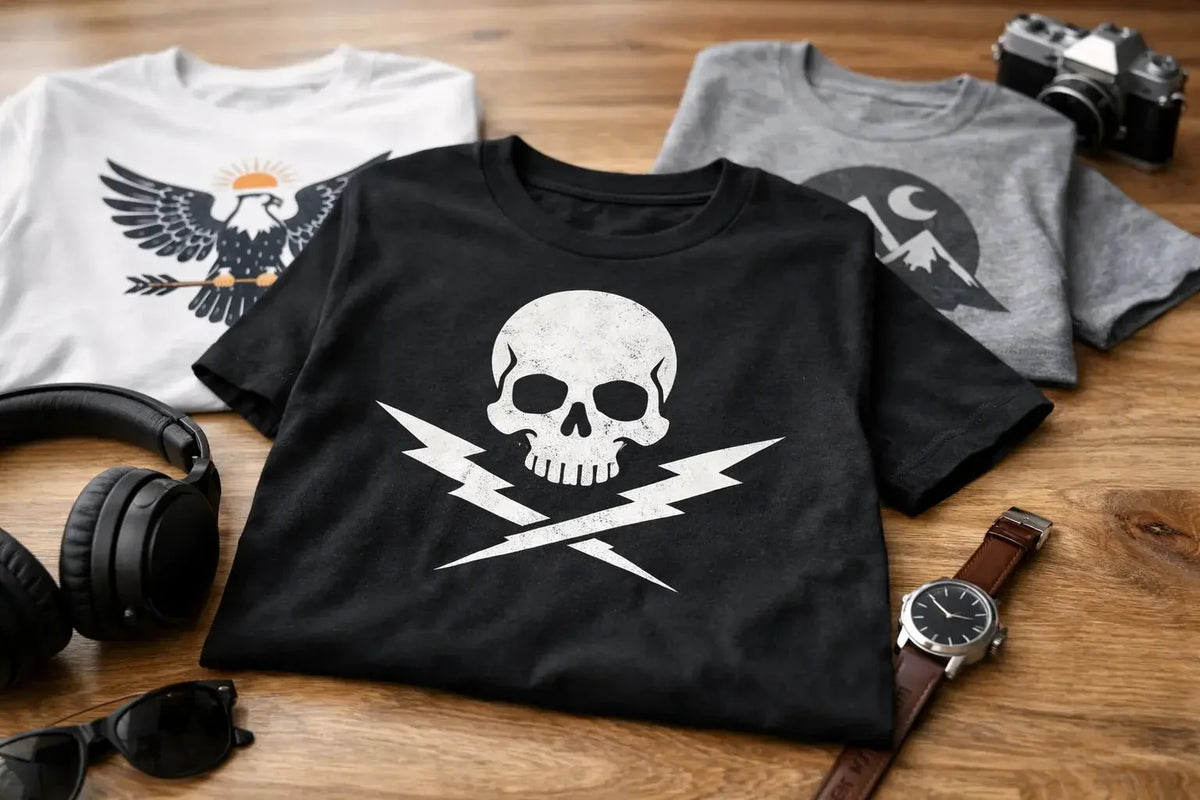
A shirt printed with a wolf, a laurel wreath, or a broken column is never just a shirt. The best symbolic graphic tees carry an idea before they carry a design. They signal allegiance to a virtue, a myth, a memory, or a way of moving through the world. That is why they continue to endure while most trend-driven graphics fade as quickly as they arrive.
Clothing has always done more than cover the body. In every era, it has marked rank, belief, tribe, and aspiration. Ancient warriors bore animal emblems on shields and standards. Philosophical schools were recognized by habits of dress and bearing. Religious and civic symbols shaped everything from jewelry to military insignia. Modern apparel did not invent symbolic expression. It simply moved it onto cotton.
What makes symbolic clothing powerful is not novelty. It is compression. A single image can hold a large idea. The owl can suggest wisdom, strategic sight, and calm intelligence under pressure. The phoenix can stand for destruction followed by renewal. The sword can imply justice, duty, sacrifice, or disciplined force depending on how it is drawn and what traditions inform it. A meaningful graphic does not need paragraphs of explanation because the symbol does the work.
What symbolic graphic tees communicate
Most graphic apparel says one of two things. It either announces participation in a passing moment, or it expresses something stable about the person wearing it. Symbolic graphic tees belong to the second category when they are done well. They are less about spectacle and more about alignment.
That alignment can be personal, cultural, or philosophical. A Medusa motif might speak to protection and the terrible power of the gaze, not merely to Greek aesthetics. A Spartan helmet might reflect admiration for discipline and endurance, though it can also become shallow if stripped of historical context. A raven can evoke memory, prophecy, battlefields, or the search for hidden knowledge depending on whether the influence is Norse, Celtic, or literary.
This is where discernment matters. Not every symbol carries a universal meaning, and not every wearer intends the same message. Context changes everything. The same serpent may mean wisdom, healing, temptation, rebirth, or divine power depending on the tradition behind it. Good design respects that complexity rather than flattening it into decoration.
The difference between decoration and meaning
There is nothing wrong with a visually striking shirt. Aesthetic impact has its place. But symbolic apparel becomes more compelling when the image has roots.
A design with roots has lineage. It comes from mythology, history, philosophy, religion, warfare, or archetypal storytelling. You can trace it. You can explain why it matters. Even if the shirt itself remains minimal, the reference behind it gives it weight.
A design without roots often borrows the surface of symbolism without the substance. It uses runes, helmets, statues, or sacred geometry because they look intense, not because they say anything coherent. The result may still be fashionable, but it rarely feels lasting. It performs depth rather than carrying it.
For people drawn to ideas like courage, mastery, mortality, or renewal, that difference is obvious. They are not looking for noise. They are looking for recognition. A symbol that reflects an internal code will always outlast one chosen for impulse.
Why ancient symbols still resonate now
Modern life has a strange relationship with meaning. People are surrounded by messaging but starved for symbols that feel earned. Much of contemporary design is made for instant consumption, which means it favors speed over memory. Ancient and classical symbols resist that pace because they come from traditions that were built slowly and tested over generations.
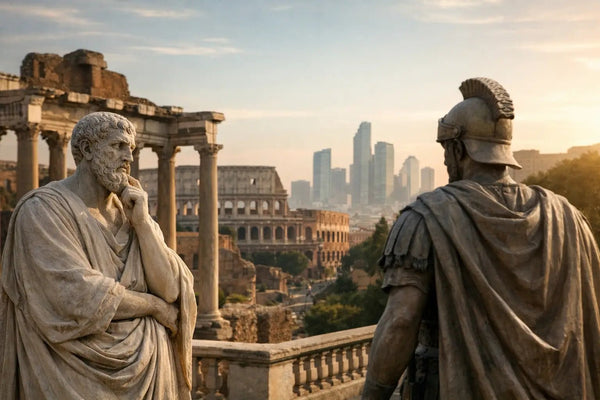
That endurance matters. A Roman eagle still carries authority because empires, standards, and civic identity made it matter. A Greek gorgon still grips the imagination because people once believed images could ward off evil and project power. A stoic bust still appears on clothing and in visual culture because the philosophical ideal of self-command remains attractive in an age of distraction.
These symbols survive because they continue to answer old human questions. How should a person act under pressure. What is worth sacrificing for. How do you meet chaos without becoming chaotic yourself. What does it mean to carry strength without vanity. Apparel cannot answer those questions on its own, but it can keep those questions close.
Symbolic graphic tees as modern armor
The idea of clothing as armor is older than fashion. Uniforms, insignia, ceremonial garments, and martial adornments all shaped identity from the outside in. Symbolic graphic tees work in a similar way, though in a quieter register.
Wearing a meaningful symbol can serve as a daily reminder. Not magic. Not performance. Reminder. A shirt marked with a lion may call a person back to courage before a difficult meeting. A shirt bearing a labyrinth may evoke the discipline of staying the course through confusion. A shirt built around a skull may not be about rebellion at all, but about memento mori - the old discipline of remembering death in order to live with seriousness.
This is one reason symbolic apparel appeals to people interested in philosophy and self-mastery. The garment becomes more than presentation. It becomes a prompt. A private standard carried in public.
Still, there is a trade-off. The more layered the symbol, the more likely it is to be misunderstood. That is not always a problem. Not every meaning needs to be explained. But it does mean the strongest symbolic designs are clear enough to be striking and deep enough to reward closer attention.
How to judge symbolic graphic tees well
If a design claims meaning, it should withstand scrutiny. Start with the symbol itself. Does it have a real historical, mythological, or philosophical basis, or is it assembled from whatever looks dramatic. Then look at the execution. The best pieces show restraint. They do not need to crowd the shirt with every possible reference to prove significance.
Material and construction matter too. A symbol tied to timeless ideals should not live on a shirt that feels disposable. Quality changes the entire message. Premium fabric, balanced fit, durable print, and deliberate composition all signal that the idea was treated with respect. If the garment is careless, the symbolism begins to feel theatrical.
It also helps to ask what the design invites. Does it point toward vanity, aggression, and empty posturing, or toward discipline, reflection, and grounded strength. Symbols have power, but that power can be directed badly. A warrior aesthetic without wisdom becomes costume. A mythic reference without humility becomes branding without soul.
This is where a brand like Hilt & Stone stands apart when it stays true to its highest standard. Symbolic apparel is strongest when it is built from story, not borrowed intensity.
The future of symbolic graphic tees
The category will likely keep growing, but not all of it will age well. As more brands use historical and mythic imagery, the gap between informed symbolism and aesthetic recycling will become sharper. Consumers are getting more literate. They can tell when a design comes from real engagement with history and when it comes from mood-board archaeology.
That is a good thing. It raises the bar. It pushes designers to study, edit, and choose with intention. It also creates space for clothing that does not chase mass appeal. Symbolic apparel does not need to speak to everyone. Its strength comes from speaking clearly to the people who recognize the reference and feel its weight.
The most lasting symbolic graphic tees will not be the loudest. They will be the ones that pair visual force with narrative depth. They will draw from myths, empires, philosophical traditions, sacred forms, and warrior codes without reducing them to costume props. They will look modern while carrying something older than fashion.
There is a reason people keep returning to these images. Symbols endure because human nature does. We still wrestle with fear, ambition, mortality, loyalty, honor, and transformation. We still look for visible ways to express invisible commitments. And when a design gets it right, it does more than complete an outfit. It reminds the wearer who they are trying to become.
Choose symbols that can bear that weight.